

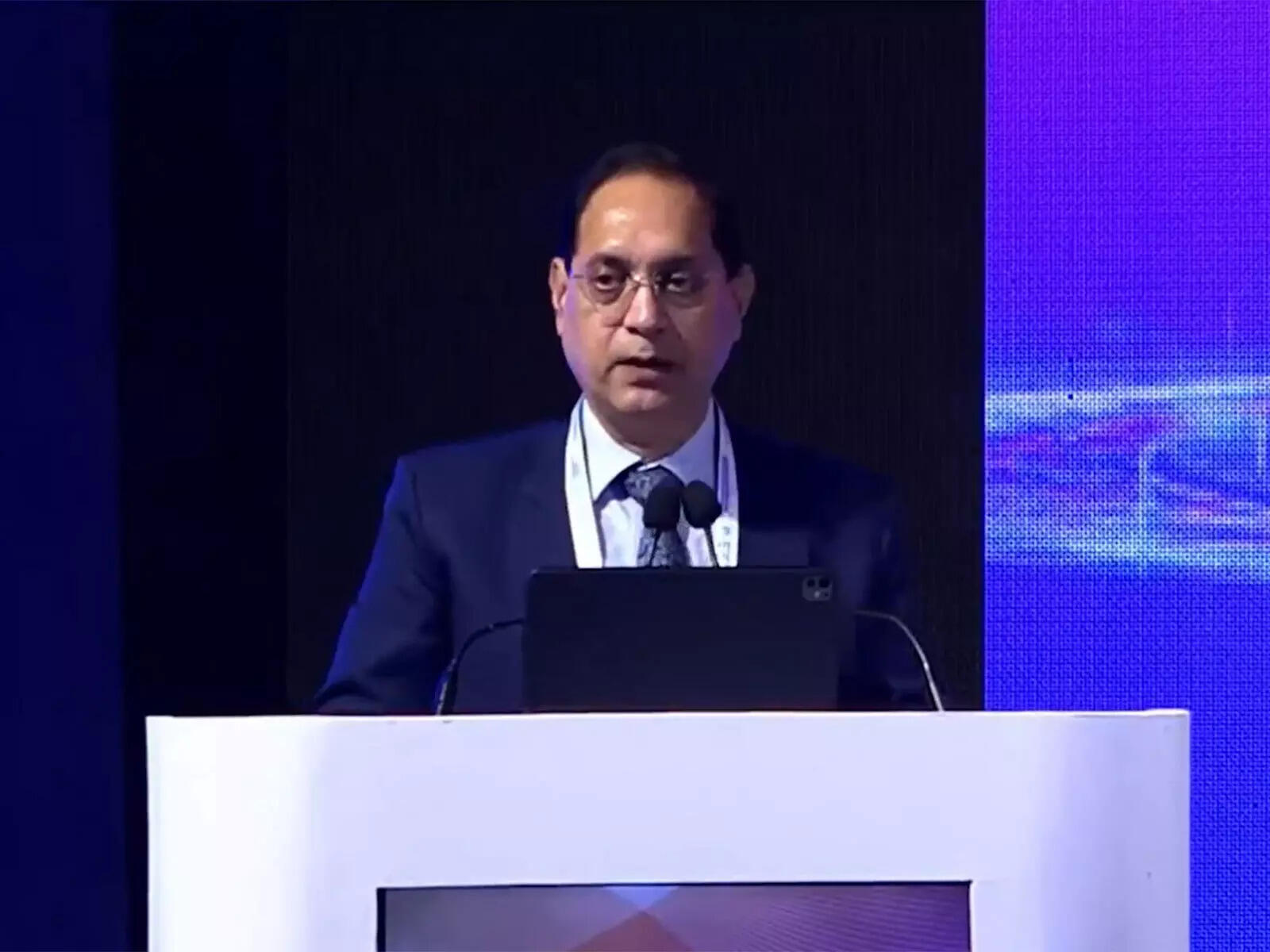
 The SEBI chief also underlined the capacity of municipal bonds for funding the urban infrastructure.
 Capital markets are ready to play an important role in funding the expansion of India’s infrastructure as the country has said Tuhin Kanta Pandey, president of its development goals, securities and exchange board of India (SEBII).
Speaking at the Infrastructure Conclave 2025, Pandey said that infrastructure is not a short -term condition and capital markets allow long -term benefits.
Pandey highlighted the four major powers supporting his claims for capital markets: “First, they bring long-term patient capital. The infrastructure is not a short-term condition. Capital markets allow pension funds, insurance companies, sovereign funds, and long-time saving from investors.”
Pandey said, the capital market helps to diversify the sources of finance. “Second, relying only on banks or government budgets, highlights the concentration risk. The market, on the other hand, introduce a palette of equipment, corporate bonds, infrastructure investment trusts (invit), reits, municipal bonds that are going to spread risks among many participants,” they said.
“Third, they offer a risk-sharing model. For example, invited developers allow operational property to be masked, while investors get access to stable yield-generating infrastructure. And fourth, capital market disclosure norms, independent audit and investor can apply disciplines, transparency and governance through the investigation of investors.
Keep together, these features make the capital market not only the financers, but also the guardians of quality and reliability in infrastructure projects.
The president of SEBI also pointed to the growing use of equipment such as IPOs, rights issues and private placements by infrastructure firms, which eat together for about one-fifth part of the total market capitalization of listed companies. In the last decade, infrastructure indices have given annual returns of 12–14 percent, showing the stable value of the area for investors.
The Real Estate Investment Trust (Reits) has also emerged as an important way. Pandey quoted the National Highway Infrastructure Trust as an example, where the operational road assets were transferred to an invitation, which made investors free of capital for new projects, offering income -making assets. Currently, five REITs registered with SEBI and 23 invites have collected ₹ 1.5 trillion, with fY25 with assets under the management of FY 8.7 trillion.
Alternative Investment Fund (AIFS) is another important contributor, growing five times in five years, from ₹ 1.1 lakh crore to June 2025 in March 2019. Up to 5.7 lakh crores.
The SEBI chief also underlined the capacity of municipal bonds for funding the urban infrastructure. Since 2017, local bodies in cities like Chennai, Varanasi, Agra and Ahmedabad have raised of 3,134 crore through release of 21 bonds. He said that green bonds, with 24 release and more than 7,500 crores, are rapidly important for climate-friendly projects in renewable energy and clean transport.
“The infrastructure structure is more than roads, ports, airports, dams, telecommunications, or power plants. It is the backbone of economic progress. It connects producers with markets, people, and India to aspire to become a $ 5 trillion economy,” he said.
Citing a World Bank study, Pandey said that the increase in infrastructure investment directly promotes GDP, the trends visible in India’s highways, metro, airports and digital connectivity.
